



How an immigration mental health evaluation supports your case
An immigration psychological evaluation is a focused mental health assessment for an immigration case. A clinician asks about your experiences and symptoms, considers how they affect daily life, and may review records or use assessment tools. The resulting report can provide evidence for a case such as asylum, a hardship waiver, a VAWA self-petition, or a U visa. It does not decide whether you qualify for relief.
The Association for Multicultural Behavioral Health (AMBH) was founded by Angelika Danek, LCSW, CRADC, our Founder and Clinical Director, who brings over 25 years of clinical experience and extensive expertise working with immigrant and multicultural populations. Our team takes a culturally sensitive approach to immigration psychological evaluations.
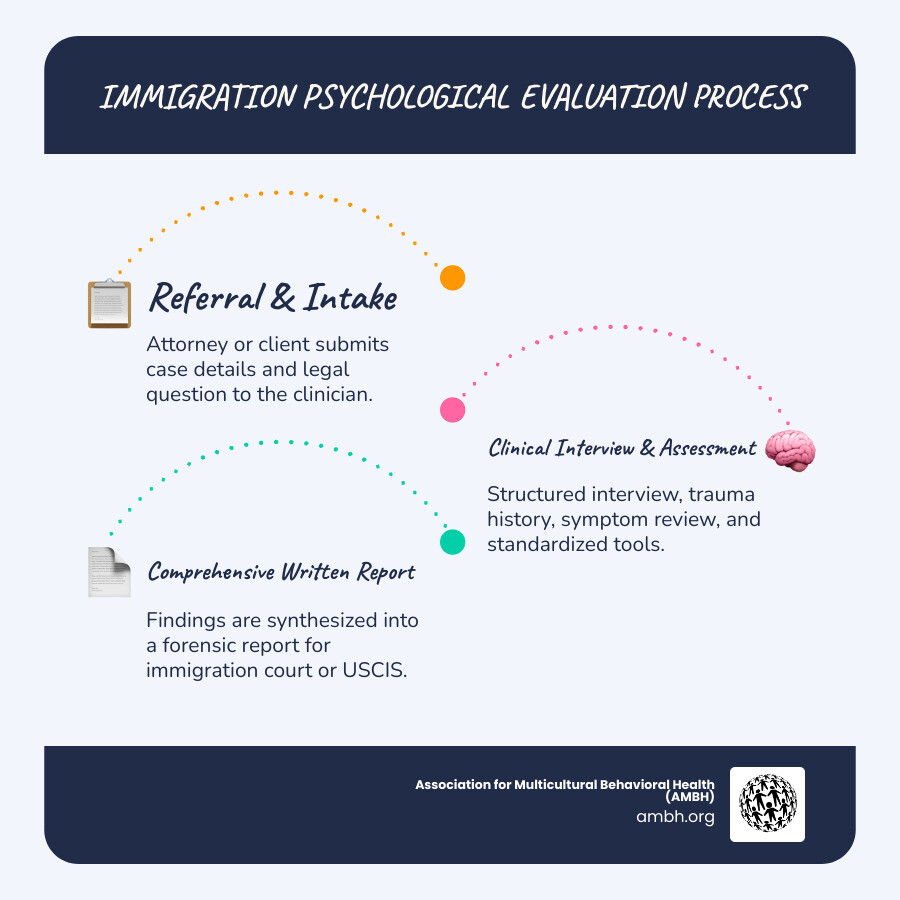
Navigating the legal immigration system involves substantial emotional and procedural complexity. An immigration mental health evaluation serves as a professional clinical tool that details psychological symptoms, historical trauma, and relational impacts for legal review.
Disclaimer: Immigration psychological evaluations are clinical evaluations only. AMBH is not a law firm and does not provide legal or immigration advice; always consult a qualified immigration attorney regarding your legal case. We do not provide medical or medication advice or prescribe medication. Consult a licensed mental health professional about symptoms, assessment, or care. If you are in crisis, call or text 988 (Suicide & Crisis Lifeline) or call 911 in an emergency.
Understanding the Clinical Value of Immigration Psychological Evaluations

In immigration proceedings, a clinical evaluation can document the psychological effects of an individual’s experiences for review by legal decision-makers. While personal declarations and legal briefs explain the statutory claims, an evaluation by a mental health professional offers independent, objective assessment of psychological functioning, emotional trauma, and cognitive health.
Clinical evaluations are commonly utilized across several legal pathways:
- Asylum Petitions: Corroborating accounts of persecution, credible fear of return, and documenting ongoing conditions such as Post-Traumatic Stress Disorder (PTSD) or Major Depressive Disorder.
- U-Visas & T-Visas: Documenting the psychological effects of crime victimization or human trafficking.
- Violence Against Women Act (VAWA) Self-Petitions: Detailing the psychological impact of battery or extreme cruelty within an abusive relationship.
- Special Immigrant Juvenile Status (SIJS): Documenting the developmental, emotional, and psychological consequences of parental abuse, abandonment, or neglect on a minor.
- Extreme Hardship Waivers (I-601 / I-601A): Demonstrating the prospective psychological, emotional, and medical hardship a qualifying U.S. citizen or lawful permanent resident relative would endure if their family member were removed.
Adhering to professional guidelines for psychological evaluations in immigration proceedings helps keep the clinical assessment methodologically sound, culturally sensitive, and legally informative without overstepping into legal advocacy.
| Relief Pathway | Case Context | Evaluation Focal Points | Key Clinical Considerations |
|---|---|---|---|
| Asylum | Past persecution or well-founded fear of future persecution | Trauma history, current PTSD/Depression symptoms, fear of return | Cultural expressions of trauma, avoidance symptoms, memory gaps |
| VAWA Self-Petition | Battery or extreme cruelty by a qualifying relative | Coercive control, emotional/physical abuse, relational trauma | Sub-clinical distress, self-blame, safety planning context |
| U-Visa / T-Visa | Psychological effects of crime victimization or human trafficking | Direct psychological sequelae of victimization, ongoing distress | Timeline of victimization, hypervigilance, functional decline |
| Extreme Hardship (I-601/A) | Effects of separation or relocation on a qualifying relative | Projected psychological deterioration, caretaking needs, disruption | Cumulative hardship, separation vs. relocation impact |
Key Requirements for Immigration Psychological Evaluations Across Legal Petitions
The clinical questions vary with the immigration matter. An immigration attorney can clarify the legal requirements; the clinician assesses the relevant psychological effects:
- Demonstrating Harm and Credible Fear: In asylum cases, clinicians assess whether the applicant’s reported symptoms are consistent with the timeline and severity of persecutory events. Evaluators carefully distinguish between expected stress and clinical disorders such as PTSD, anxiety, or depressive conditions.
- Documenting Coercive Control and Abuse: In VAWA evaluations, clinicians may assess the psychological effects of physical or emotional abuse, coercive control, and isolation. Mental health assessments document the psychological sequelae of these dynamic relational traumas.
- Establishing Crime-Related Distress: For U-Visa applicants, clinicians document that the psychological distress is directly linked to the qualifying criminal act, evaluating functional impairment in work, interpersonal relationships, and daily tasks.
Differentiating Clinical Therapy from Forensic Mental Health Assessment
It is vital to distinguish between ongoing psychotherapy and an immigration mental health evaluation:
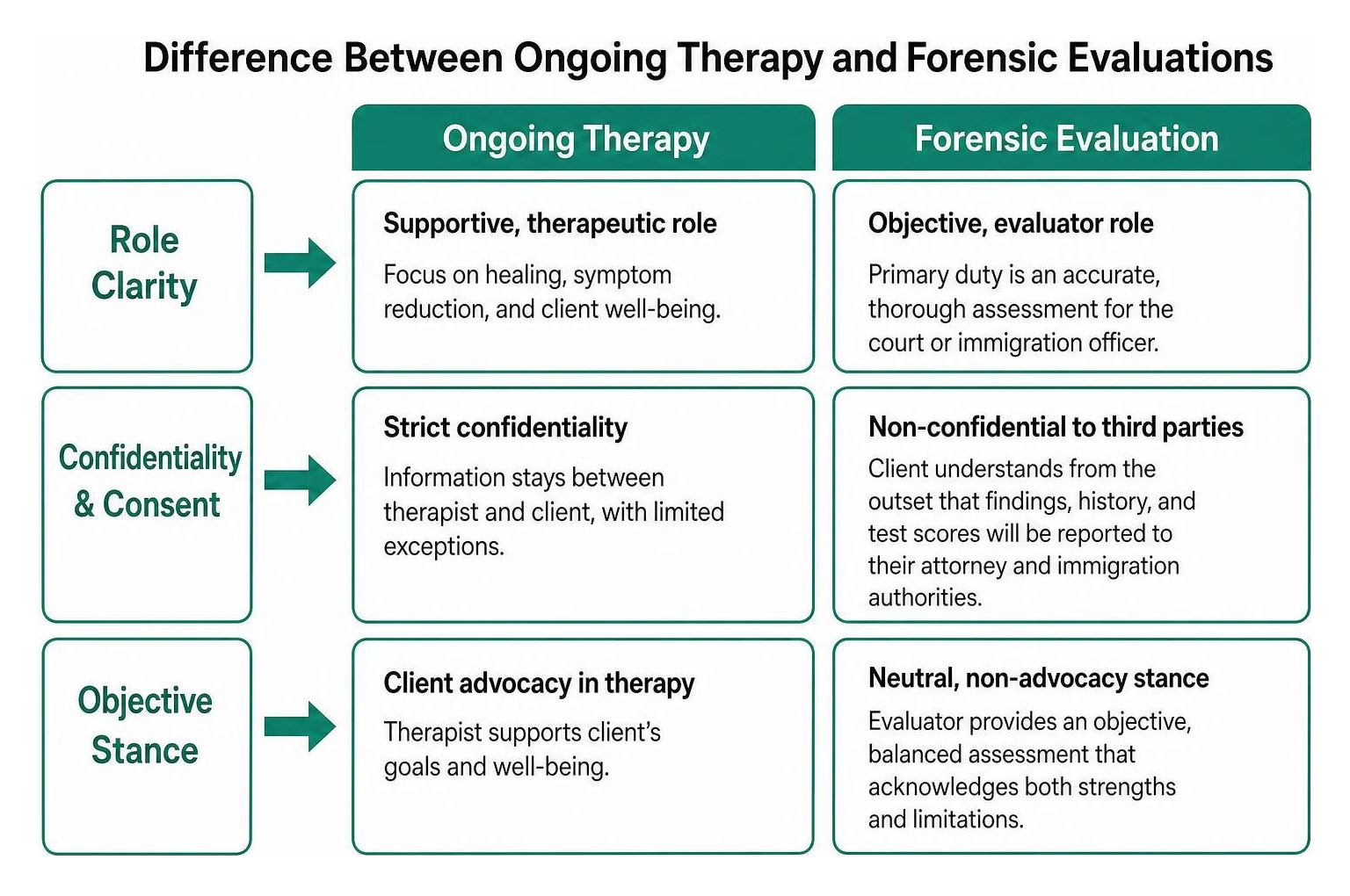
- Role Clarity: In traditional clinical therapy, the psychotherapist acts in a supportive, therapeutic role focused on healing and symptom reduction. In a forensic or psycholegal evaluation, the clinician functions as an objective, neutral evaluator whose primary duty is an accurate, thorough assessment for the court or immigration officer.
- Informed Consent and Confidentiality: Before an evaluation, the clinician explains its purpose, the limits of confidentiality, and who may receive the report.
- Objective Stance: The evaluator avoids serving as an advocate. Providing an objective, balanced evaluation that acknowledges both strengths and limitations protects the integrity and judicial credibility of the report.
The Psycholegal Framework for Extreme Hardship Waivers

For extreme hardship waiver matters involving Forms I-601 or I-601A, a clinical evaluation may document the psychological and functional effects of separation or relocation on a qualifying relative, including the stress related to medical and financial circumstances. Consult an immigration attorney about eligibility and the appropriate form.
Evaluating Multidimensional Hardship on Qualifying Relatives
Clinical evaluations may document cumulative hardship factors, including their combined psychological effects. Our role as clinicians is to assess these dimensions thoroughly:
- Psychiatric and Emotional Conditions: Pre-existing mental health conditions (such as chronic Major Depressive Disorder or Generalized Anxiety Disorder) in the qualifying relative that would be exacerbated by separation or forced relocation to an unfamiliar country.
- Medical Dependencies: Chronic physical health conditions where the applicant serves as the primary caregiver, driver, or financial provider for medical treatments.
- Family Relationships: Effects on children and family relationships that may contribute to the qualifying relative’s psychological distress.
- Economic Interdependence: How the loss of household income or the financial burden of managing two households across international borders compounds psychological distress.
- Dual-Scenario Analysis: A clinical evaluation may consider the psychological effects of two situations:
- Separation Hardship: The impact if the qualifying relative remains in the United States while the applicant is removed.
- Relocation Hardship: The impact if the qualifying relative relocates abroad with the applicant, including safety concerns, loss of access to healthcare, language barriers, and loss of employment.
Maintaining Evaluator Credibility and Objective Analysis
To support a clear, objective clinical evaluation, clinicians maintain clear standards of objectivity:
- Neutral Clinical Tone: The written report must use professional, objective clinical language rather than persuasive legal rhetoric.
- Clinical Grounding: Evaluators explain the basis for their clinical findings and acknowledge the assessment’s limitations.
- Transparency: Evaluators distinguish reported experiences from clinical opinions and explain the limits of their conclusions.
- Psycholegal Formulation: The clinician explains the connection between the immigrant’s potential removal and possible psychological effects on the qualifying relative.
Methodological Standards and Report Structuring
Immigration evaluations draw on assessment skills, ethics, trauma-informed practice, and cultural responsiveness. The assessment brings together clinical, cultural, and immigration-related methods to support a careful, culturally informed assessment.
Our experienced mental health team provides culturally informed clinical evaluations:
The clinician assesses relevant experiences, trauma-related symptoms, and effects on daily functioning in relation to the clinical question raised by the case. Ask AMBH which interviews, records, and assessment tools may be appropriate for your evaluation.
Cultural Competence in Immigration Psychological Evaluations
Conducting immigration psychological evaluations requires deep cultural responsiveness. Clinicians consider cultural and linguistic context when assessing trauma-related symptoms and daily functioning.
Key cultural considerations include:
- Language and Interpretation: AMBH offers evaluations in English, Polish, Russian, and Spanish.
- Assessment Limitations: Clinicians explain relevant cultural and linguistic limitations of their assessment.
- Cultural Humility: Clinicians consider how regional sociopolitical contexts, migration journeys, and community values shape an individual’s reporting of trauma and family dynamics.
Bringing Findings Together in a Clinical Report
A clinical report can help legal decision-makers understand the individual’s mental health. Its content depends on the clinical question and assessment; relevant areas may include:
- Identifying Information & Referral Purpose: Clear statement of the client’s identity, the legal relief sought, and evaluation dates.
- Informed Consent & Limits of Confidentiality: Explicit documentation that the client understands the forensic nature and purpose of the evaluation.
- Psychosocial and Migration Chronology: A coherent narrative detailing early history, pre-migration conditions, trauma events, and post-migration adjustment.
- Mental Status Examination: Objective observations of speech, affect, thought processes, memory, and cognitive presentation during interviews.
- Clinical Findings & Limitations: The findings and the limits of the assessment.
- Symptoms & Daily Functioning: Relevant psychological symptoms and their effects on everyday activities and relationships.
- Summary and Prognostic Outlook: A concise clinical summary providing an objective prognosis and outlining recommended mental health or medical support.
Frequently Asked Questions About Immigration Evaluations
What is the primary purpose of an immigration mental health evaluation?
The primary purpose is to provide an objective, expert assessment of an individual’s or qualifying relative’s psychological functioning. The report details diagnoses, trauma histories, and emotional hardships to assist USCIS officers or immigration judges in evaluating legal eligibility.
How does an evaluation differ from ongoing psychotherapy?
An evaluation is a time-limited assessment designed to produce a comprehensive written report for legal proceedings. Ongoing psychotherapy is an open-ended therapeutic treatment focused on symptom relief and personal growth. Ask the clinician to explain their evaluation role and how it differs from ongoing therapy.
Can evaluations be conducted remotely via telehealth?
Yes. AMBH offers outpatient immigration psychological evaluations via secure telehealth to clients nationwide. Telehealth evaluations require clear protocols, including secure video connections, identity verification, and an environment that ensures privacy and confidentiality.
Conclusion
Immigration mental health evaluations provide clear, objective clinical documentation of trauma, psychological distress, and family hardship within immigration proceedings. By combining thorough clinical interviewing, standardized assessment tools, and cultural sensitivity, a detailed evaluation can help USCIS adjudicators and immigration judges understand the individual’s mental health.
At the Association for Multicultural Behavioral Health (AMBH), our multilingual clinicians provide comprehensive immigration psychological evaluations tailored to the needs of diverse immigrant communities. We conduct evaluations in person at our Chicago office in Edison Park and via telehealth for clients nationwide.
For more information regarding scheduling for an immigration evaluation, please contact our office.