



Finding Child Therapy in Chicago That Fits Your Family
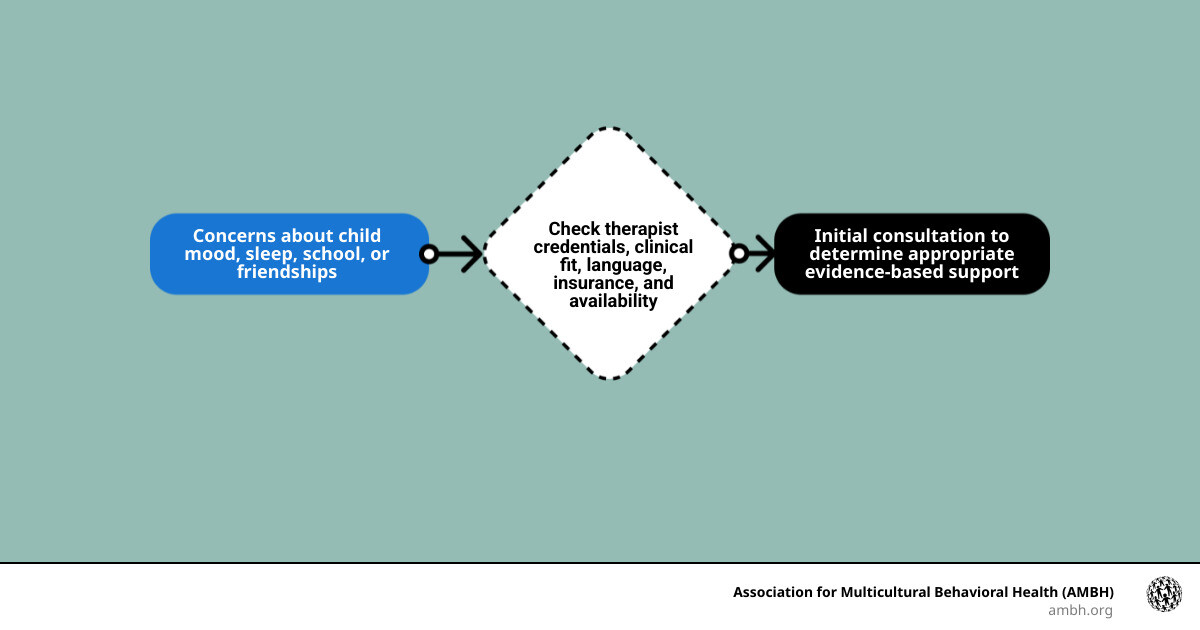
To find child therapy in Chicago, start with an Illinois-licensed therapist who works with your child’s age and concerns. Ask how they involve parents, which approaches they use, and whether they offer care in your family’s preferred language. Check your insurance benefits and appointment availability before booking.
If changes in your child’s mood, sleep, school life, or friendships are lasting or getting in the way, you do not need to wait for a crisis to ask for help. An initial visit can help you and the therapist decide what support makes sense.
At the Association for Multicultural Behavioral Health (AMBH), our team provides child therapy in Edison Park, Chicago. Our founder and clinical director, Angelika Danek, MSW, LCSW, CRADC, brings more than two decades of behavioral health experience to our culturally sensitive approach.
Evidence-Based Approaches to Child Therapy Chicago Parents Trust
Children and teens may express distress differently from adults. Tailored, evidence-based interventions help bridge this gap by matching therapeutic techniques to your child’s specific developmental milestones and emotional needs.
In our outpatient practice, clinicians utilize a variety of modalities to foster self-regulation, healthy communication, and emotional resilience. The right approach depends heavily on your child’s age, expressive language abilities, and specific challenges.
| Modality | Target Age Group | Primary Clinical Goals | Common Techniques Used |
|---|---|---|---|
| Play-Based Approaches | Based on developmental needs | Exploring feelings and experiences, building coping skills | Play and creative expression |
| Cognitive Behavioral Therapy (CBT) | Based on individual needs | Goals discussed with the clinician | Ask the clinician how CBT would be tailored to your child |
| Family Counseling | Children and families, as appropriate | Supporting communication, relationships, and caregivers | Parent guidance, family sessions, and practical home strategies |
Play Therapy and Cognitive Behavioral Therapy (CBT)
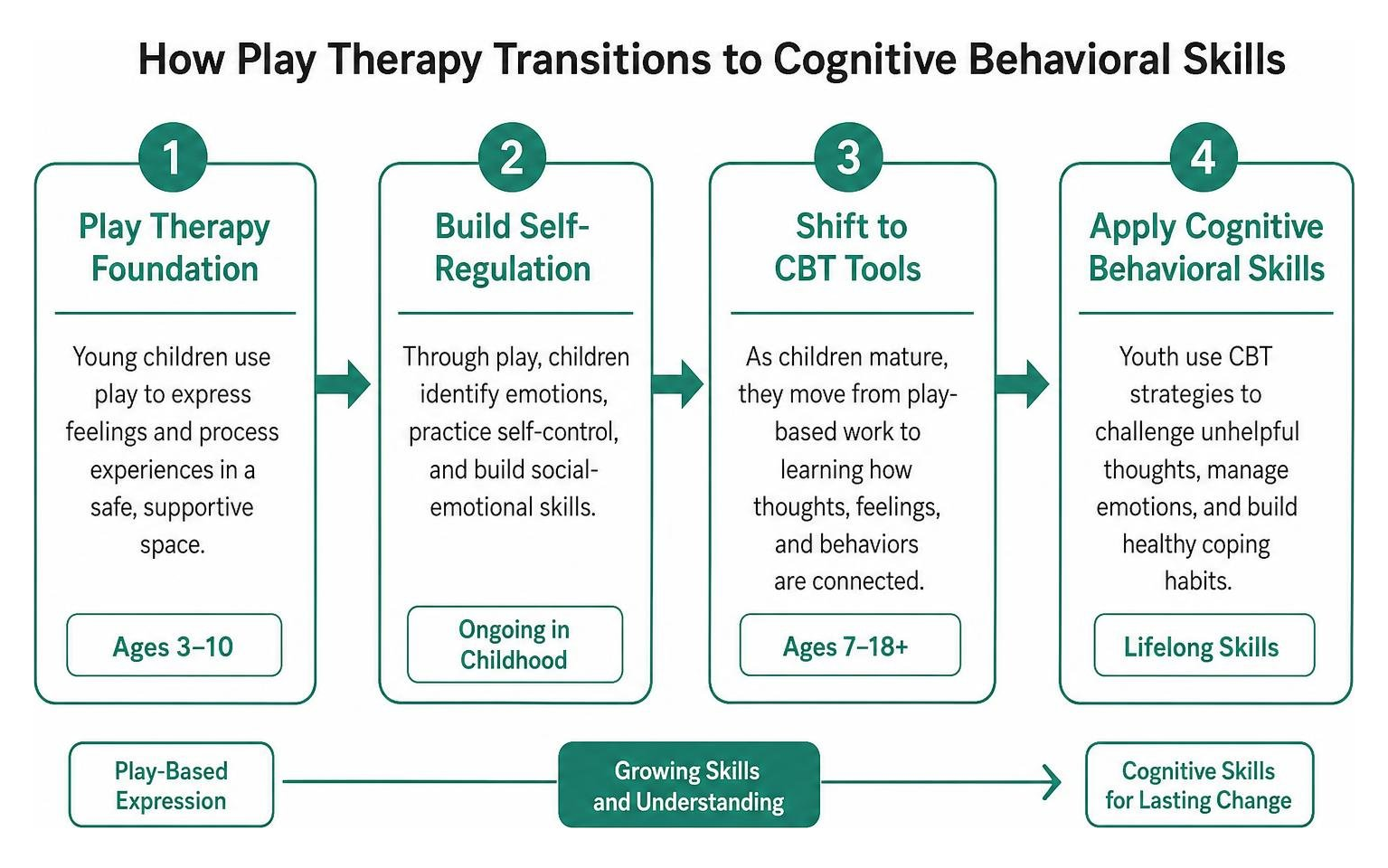
For younger children, play and creative expression can be ways to communicate feelings and process experiences. Play therapy offers a structured, supportive environment where a therapist helps children identify feelings, practice self-control, and work through stress.
AMBH clinicians use Cognitive Behavioral Therapy (CBT), with treatment selected according to individual needs rather than an age-based transition. Ask a licensed clinician how CBT could be tailored to your child’s needs through our Child & Adolescent Therapy services.
Specialized Interventions for Trauma, Anxiety, and ADHD
When young people face deep-seated stress, neurodevelopmental differences, or distressing life events, specialized care is vital.
- Anxiety: AMBH supports children with anxiety concerns. Ask a licensed clinician which approaches may be appropriate.
- Attention-Deficit/Hyperactivity Disorder (ADHD): AMBH supports children with ADHD, impulsivity, and attention difficulties. Ask the clinician about goals and strategies suited to your child. AMBH provides counseling and behavioral support; we do not prescribe or manage medication.
- Trauma & Stress: Families concerned about the effects of grief, violence, disruptions, or other distressing experiences can ask a licensed clinician about Trauma Therapy. The clinician can discuss which approaches are appropriate for the child’s developmental needs and proceed at the child’s pace.
If your child is experiencing thoughts of self-harm, please know you are not alone. If you are in crisis, call or text 988 (Suicide & Crisis Lifeline) or call 911 in an emergency.
Discussing Concerns About Your Child With a Licensed Professional
If you are concerned about changes in your child’s emotions, behavior, relationships, or daily life, discuss those concerns with a licensed mental health professional. Share what has changed and how it affects your family; a clinician can help assess your child’s needs. For physical concerns, consult your child’s pediatrician.
Seeking professional guidance can help families understand their concerns and explore appropriate support.
Navigating the Search for Quality Pediatric Mental Health Care
Finding a trusted therapist in a bustling city involves looking beyond a simple directory listing. You want a qualified professional who understands your family’s culture, daily environment, and unique community background.
Selecting the Right Child Therapy Practice in Chicago for Your Family
Ask prospective therapists about their Illinois licensure and qualifications. When reviewing clinicians, look for specific training in pediatric behavioral health and child development.
Cultural competence is equally critical. For children growing up in multilingual or immigrant households, being understood within their cultural context is essential. Many children we work with were born or raised in the United States and feel most comfortable speaking English, while their parents prefer Polish. Our bilingual therapists work in both Polish and English, so your child can speak in the language they choose and you can stay fully involved in yours. AMBH’s wider team also offers therapy in Spanish, Russian, and Arabic. Parents can review our Our Team page to learn about our clinicians and their clinical backgrounds.
What to Expect During Initial Child Therapy Consultations in Chicago

Starting therapy can feel intimidating for both parents and kids, and you can ask the clinician what intake involves and how they help children feel comfortable.
- Parent Intake Session: Ask the clinician whether the first appointment will involve parents or guardians, your child, or both. Ask what information to bring and what the initial discussion will cover.
- Child Interview & Rapport Building: Ask how the therapist will help your child feel comfortable and begin building trust. The focus is on building safety and trust, not putting the child on the spot.
- Collaborative Treatment Planning: Together, the clinician and family set measurable goals. These may include reducing school morning meltdowns, mastering calming strategies, or improving family communication routines.
Navigating Insurance Coverage and Therapy Costs in Illinois
Understanding outpatient mental health benefits helps families plan care without unnecessary financial surprises.
At the Association for Multicultural Behavioral Health, we accept many major insurance plans, including Blue Cross Blue Shield (BCBS), Aetna, Cigna, Humana, UnitedHealthcare/Optum, Medicare (including Advantage PPO), and TRICARE. Please note that AMBH does not accept Medicaid.
For self-pay clients or out-of-network care:
- Individual therapy sessions start at $150.
- Couples sessions start at $180. Learn more about our individual, family, and group psychotherapy services.
- Group therapy is $45 per hour.
- Reduced fee may be available case by case.
Before your first visit, contact your insurance carrier to verify your deductible, copayment, or coinsurance responsibilities for outpatient mental health office visits.
How Parents Can Reinforce Behavioral Progress at Home
Ask your child’s therapist which skills you can practice together at home and how to fit them into your family’s routine.
Here are practical ways to support your child’s growth:
- Respond to Distress With Support: Ask your child’s therapist how to respond during moments of distress and whether a calm voice or supportive presence may be helpful.
- Discuss Predictable Routines: Consider discussing predictable homework, dinner, screen-time, and bedtime routines with your child’s therapist.
- Praise the Effort, Not Just the Outcome: Use specific positive reinforcement. Instead of “good job,” try saying, “I noticed how hard you worked to take deep breaths when you felt frustrated with that puzzle.”
- Listen Before Offering Solutions: Give your child space to express sadness or anger without jumping in to solve the problem immediately. Try acknowledging their feelings with words such as, “It sounds like that was really disappointing for you.”
Frequently Asked Questions About Child Mental Health
How do I know if my child needs play therapy or standard talk therapy?
A licensed therapist can help select an approach based on your child’s developmental needs, communication preferences, and concerns. At AMBH, younger children may communicate through play and creative expression, while adolescent therapy may focus on emotions, relationships, identity, and coping skills. There is no single age cutoff that determines the right approach.
Does commercial health insurance cover outpatient therapy for children in Illinois?
Coverage for your child’s outpatient therapy depends on your plan. Contact your insurer to confirm covered services, costs, and whether your chosen clinician is in network. While our clinic accepts many major insurance carriers (including BCBS, Aetna, Cigna, Humana, UnitedHealthcare/Optum, Medicare, and TRICARE), we always encourage families to call the member services number on the back of their insurance card to confirm their outpatient mental health benefits.
How can parents participate in their child’s ongoing treatment?
AMBH’s family-centered approach may include parent guidance, family sessions, and practical strategies for home. Ask your child’s therapist how you can participate while respecting your child’s privacy and treatment needs.
Conclusion
Guiding a child through emotional or behavioral challenges can feel overwhelming. Compassionate, individualized therapy can support children and families as they work toward goals such as understanding feelings, navigating relationships, and developing coping skills.
The Association for Multicultural Behavioral Health (AMBH) offers outpatient child, adolescent, and family therapy in Edison Park, Chicago (6650 N. Northwest Highway, Suite 215), as well as secure telehealth services for families throughout Illinois. Our multilingual team is here to support your child with culturally sensitive, personalized care.
To learn more about our outpatient services or to speak with our clinical intake team, please Contact our office directly or call us at (773) 313-3757.