



When to Seek Teen Substance Abuse Counseling
You do not need to wait for a diagnosis to ask for help. If your teen’s substance use worries you, consult a licensed professional about an assessment. Teen substance abuse counseling may include individual therapy to build coping skills and family sessions to improve communication. The right plan depends on your teen’s needs and safety.
It can be hard to tell whether a teen is experimenting or developing a more serious problem. A calm conversation and an early assessment can help your family decide what support makes sense, without blame or shame.
Our Founder and Clinical Director is Angelika Danek, LCSW, CRADC, of the Association for Multicultural Behavioral Health (AMBH). This guide provides general information on teen substance abuse counseling, including care for families navigating different languages and cultures.
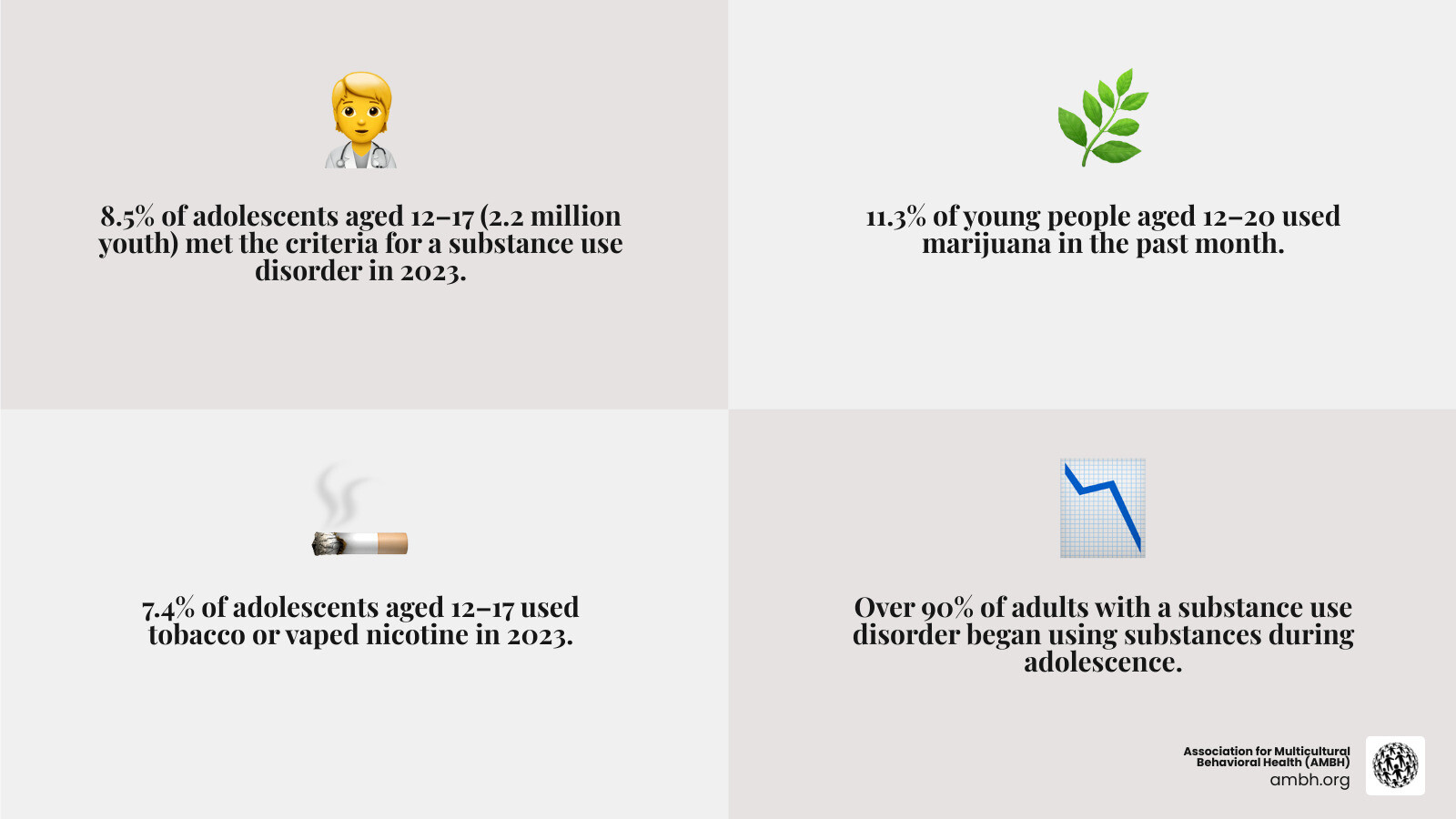
The Substance Abuse and Mental Health Services Administration (SAMHSA) provides information about substance use prevention and finding support.
category: Mental Health Resources
Earlier substance use is associated with greater risks to mental and physical health and school functioning. If you are concerned, consult a licensed professional about support.
Understanding Adolescent Substance Use: Risk Factors and Impact
Adolescence is a period of rapid physical, emotional, and social change. While occasional risk-taking can be a typical part of exploring independence, substance use introduces serious risks to health and emotional well-being. If you notice changes that concern you, discuss them with a licensed professional.
Discussing Concerns With a Licensed Professional
Substance use affects multiple areas of a young person’s daily life. Parents and caregivers can discuss their concerns with a licensed professional rather than using a symptom checklist.
Bring your questions about your teen’s well-being, school life, and family relationships to the appointment. Ask how an assessment works and how caregivers can participate.
Biological, Psychological, and Social Risk Factors
Ask a licensed professional which factors may be relevant to your teen:
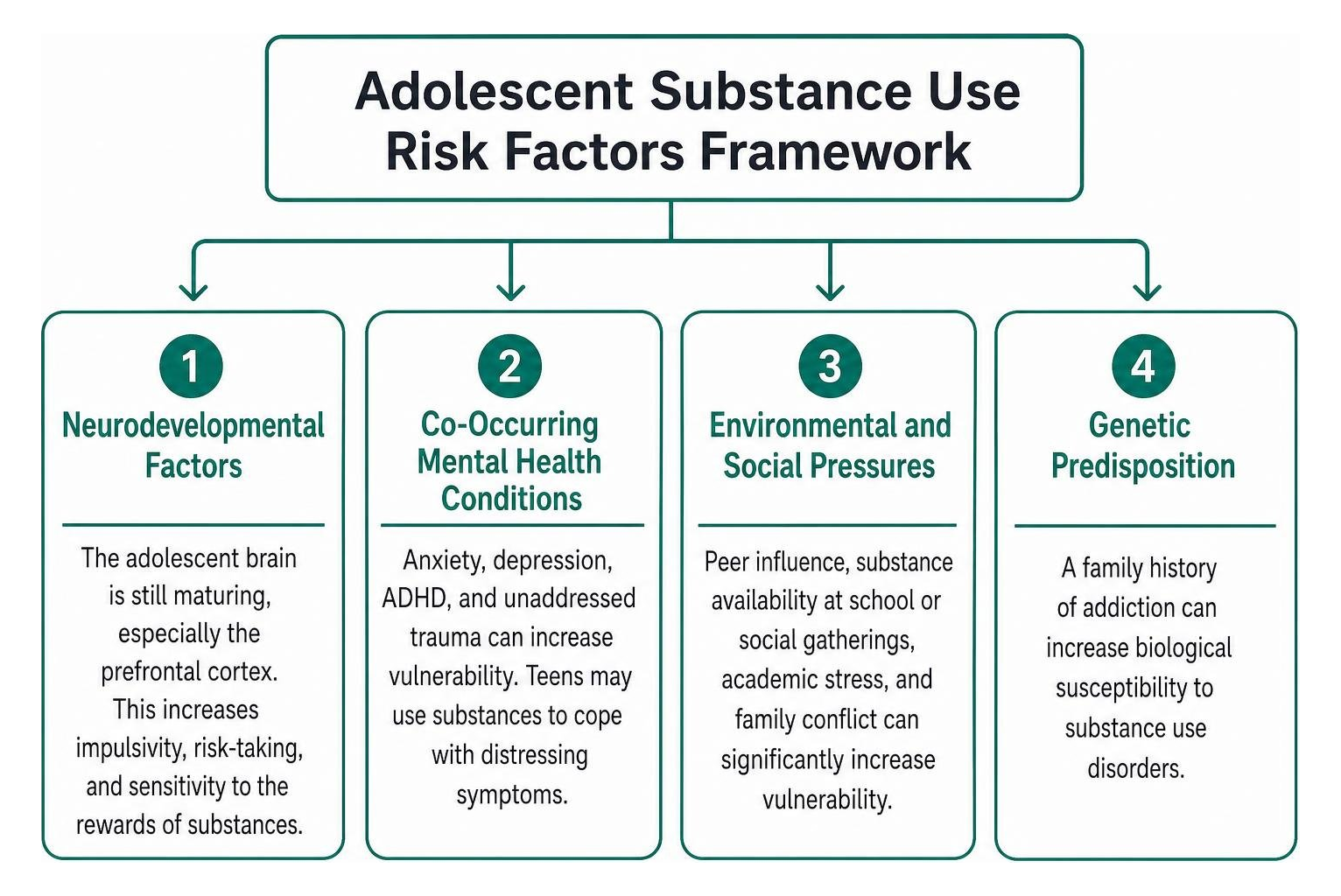
- Development: Ask how your teen’s developmental stage may be considered during an assessment.
- Mental Health and Stress: Bring questions about mental health, stress, or trauma.
- Social Environment: Discuss concerns about peers, school pressures, or difficult transitions.
Long-Term Physical and Mental Health Consequences
Adolescent substance use can affect concentration, memory, and school performance.
Earlier substance use is associated with greater mental health burden and physical health concerns (review hosted by NIH).
Approaches to Teen Substance Abuse Counseling
Family-based therapy is an established approach to adolescent substance use treatment (review hosted by NIH). AMBH offers supportive child and adolescent therapy.

Discussing Counseling Options
Ask a licensed professional which counseling approaches may fit your teen’s concerns, how sessions work, and how progress will be reviewed.
Family Involvement in Counseling
Caregivers can ask about participating in family counseling.
AMBH offers individual and family psychotherapy. Ask a licensed therapist how family sessions could address communication, boundaries, and your concerns about substance use.
Telehealth Access in Illinois
AMBH provides telehealth for clients located in Illinois. Contact our team to discuss available outpatient counseling options.
Outpatient Counseling and Treatment Planning
Outpatient treatment allows adolescents to receive structured therapeutic care while remaining in their home environment, attending school, and maintaining regular family routines.
| Counseling Modality | Primary Focus | Concerns to Discuss With a Licensed Professional |
|---|---|---|
| Individual Outpatient Therapy | Ask about coping skills, managing emotions, and recognizing situations linked to substance use. | Personal challenges, anxiety, or trauma. |
| Family Counseling | Ask about family conflict, boundaries, and trust. | Family communication and conflict around substance use. |
| Group Counseling | Ask about peer discussion, social skills, and shared recovery strategies. | Interest in structured peer discussion and shared problem-solving. |
| Combining Counseling Options | Ask how individual and family counseling might fit together. | Whether caregiver involvement would be appropriate. |
Discussing Whether Outpatient Counseling Is Appropriate
Consult a licensed professional to determine whether outpatient care is appropriate for your teen. At Association for Multicultural Behavioral Health (AMBH), our outpatient services in Edison Park, Chicago, focus on individualized counseling and skill-building.
(Please note: AMBH provides outpatient psychotherapy and does not prescribe medication. If your teen needs support beyond outpatient psychotherapy, ask a licensed professional about appropriate additional resources.)
The Importance of Culturally Responsive Teen Substance Abuse Counseling
Families can discuss language preferences, cultural background, family values, and concerns about cultural differences with their therapist.
At AMBH, our team provides culturally responsive therapy. Ask which language options are available for teen substance use counseling. Families can ask our team how therapy can address generational and cultural differences and support open communication.
How Families Can Support Recovery and Prevent Substance Abuse
Parents play a pivotal role in preventing substance use and supporting recovery. Consider discussing clear expectations and ways to keep communication open with a licensed counselor.

Practical Communication and Boundary-Setting Strategies
- Practice Active Listening: Approach conversations with calm curiosity rather than accusation. Ask open-ended questions like, “I’ve noticed you’ve seemed stressed lately. How are things going with your friends?”
- Establish Clear, Consistent Boundaries: Set explicit rules regarding curfew, substance use, and social accountability, along with predictable, fair consequences.
- Secure Household Substances: Keep alcohol, prescription medications (especially opioids, sedatives, and stimulants), and cannabis products locked away.
- Model Healthy Stress Management: Demonstrate positive coping strategies for managing adult stress, showing teens that substances are not needed to unwind or manage difficult emotions.
Crisis Resources and Early Prevention Steps
If your family is navigating acute concerns, the following resources offer starting points for finding support:
- 988 Suicide & Crisis Lifeline: If you are in crisis, call or text 988 (Suicide & Crisis Lifeline) or call 911 in an emergency.
- SAMHSA National Helpline: Visit SAMHSA’s National Helpline page for current contact and service information.
- Professional Assessment: Ask a licensed professional about an assessment and appropriate support.
- Youth & Family Resources: Explore community education through local prevention programs. Families can also review additional guidance by navigating adolescent mental health resources.
When to Seek Professional Teen Substance Abuse Counseling
If you are concerned about your teen’s substance use or safety, consult a licensed professional. You do not need to identify a disorder before asking for help. Call 911 in an emergency.
Ask a licensed professional how an assessment can address safety concerns, mental health, and daily functioning and inform an individualized care plan.
Frequently Asked Questions About Adolescent Addiction Support
How can parents raise concerns about substance use?
Describe your concerns to a licensed professional and ask whether an assessment is appropriate. You do not need to diagnose a substance use disorder before asking for support.
What does outpatient counseling involve?
Outpatient counseling involves attending scheduled counseling sessions while continuing to live at home. Consult a licensed professional to determine whether it is appropriate for your teen.
What should parents do if a teenager refuses to attend therapy?
Avoid escalating ultimatums. Frame counseling not as a punishment, but as a neutral, supportive space to navigate stress and personal goals. If your teen remains hesitant, parents can begin by attending counseling sessions themselves to discuss communication, boundaries, and their own support needs with a licensed counselor.
Supporting Your Teen’s Path Forward
Addressing adolescent substance use can feel overwhelming, but you do not have to navigate this journey alone. With timely intervention, clear family boundaries, and professional support, teenagers can develop healthy coping mechanisms and build a positive foundation for the future.
At the Association for Multicultural Behavioral Health (AMBH), our licensed counselors and therapists provide compassionate, culturally responsive outpatient care tailored to adolescents and their families. Located in Edison Park, Chicago (6650 N. Northwest Highway, Suite 215), we serve families in Chicago and surrounding communities, as well as clients located in Illinois via secure telehealth.
We accept most major insurance plans (including BCBS, Aetna, Cigna, Humana, UnitedHealthcare/Optum, Medicare (including Advantage PPO), and TRICARE; Medicaid is not accepted). For self-pay clients, individual sessions start at $150, couples sessions start at $180, and groups are $45 per hour; reduced fee may be available case by case.
To schedule an initial outpatient assessment or learn more about our outpatient substance abuse and addiction treatment, please reach out through our confidential contact form.
References
Fadus and colleagues. Adolescent Substance Use Disorder Treatment: An Update on Evidence-Based Strategies.