



Finding Arabic-Speaking Therapy That Fits Your Needs
To find Arabic speaking therapy, start with a licensed mental health clinician who offers sessions in Arabic and works with your concern. Ask about their dialect, fees, insurance, and whether sessions are in person or online.
At the Association for Multicultural Behavioral Health (AMBH), our team offers outpatient counseling in Arabic and other languages. You can meet at our Edison Park office in Chicago; telehealth is available only while you are in Illinois.
Our founder and clinical director, Angelika Danek, LCSW, CRADC, leads AMBH’s multilingual team. We help people seeking Arabic speaking therapy find care that respects their language and cultural background.
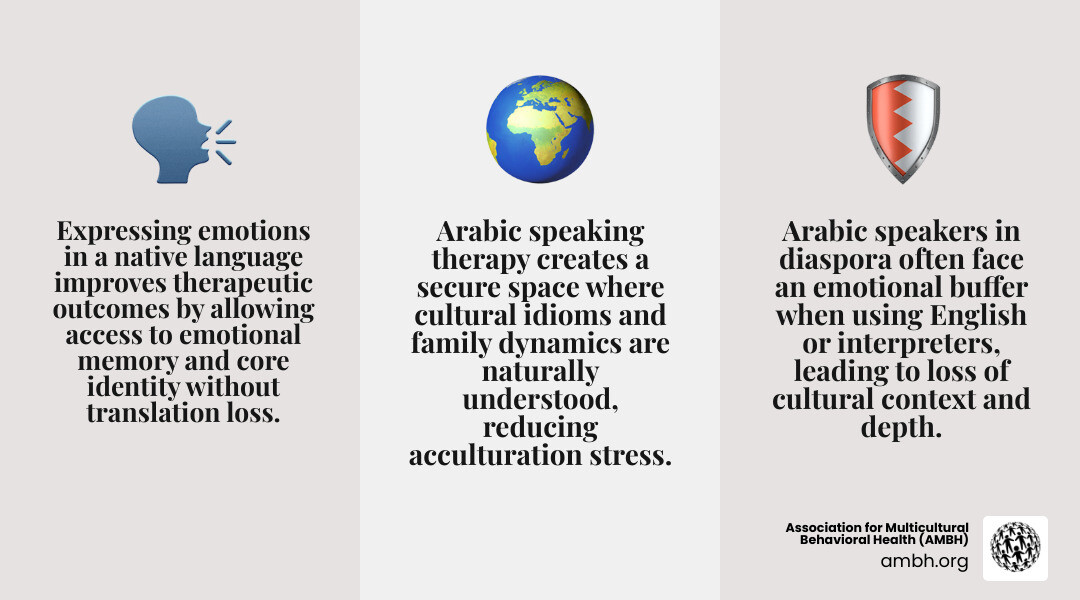
Why Arabic Speaking Therapy Matters for Mental Health and Communication
Expressing deep emotional distress is hard enough on its own. When you also have to translate your thoughts into a second language, therapy can feel like trying to run underwater. When choosing a therapist, consider which language you prefer for discussing feelings, memories, and identity.
Consider whether you would prefer to discuss personal experiences directly in Arabic, in English, or with an interpreter’s assistance. Arabic speaking therapy may help you discuss your experiences in the language you prefer.
| Dimension | Native-Language Arabic Therapy | Therapy with an Interpreter |
|---|---|---|
| Emotional Processing | Can I use my preferred Arabic words to describe emotions? | How will we communicate my preferred emotional vocabulary? |
| Cultural Safety | How will we discuss my cultural background and values? | How will the clinician and interpreter clarify my cultural context? |
| Privacy & Confidentiality | What confidentiality arrangements apply to sessions with my clinician? | What confidentiality arrangements apply when an interpreter participates? |
| Nuance & Idioms | How will we clarify idioms or spiritual terms that matter to me? | How will we check the meaning of interpreted idioms or spiritual terms? |
You can discuss concerns about mental health stigma, adjusting to a new culture, tensions between generations, and family expectations with your clinician. AMBH aims to provide respectful, nonjudgmental care that considers your cultural background.
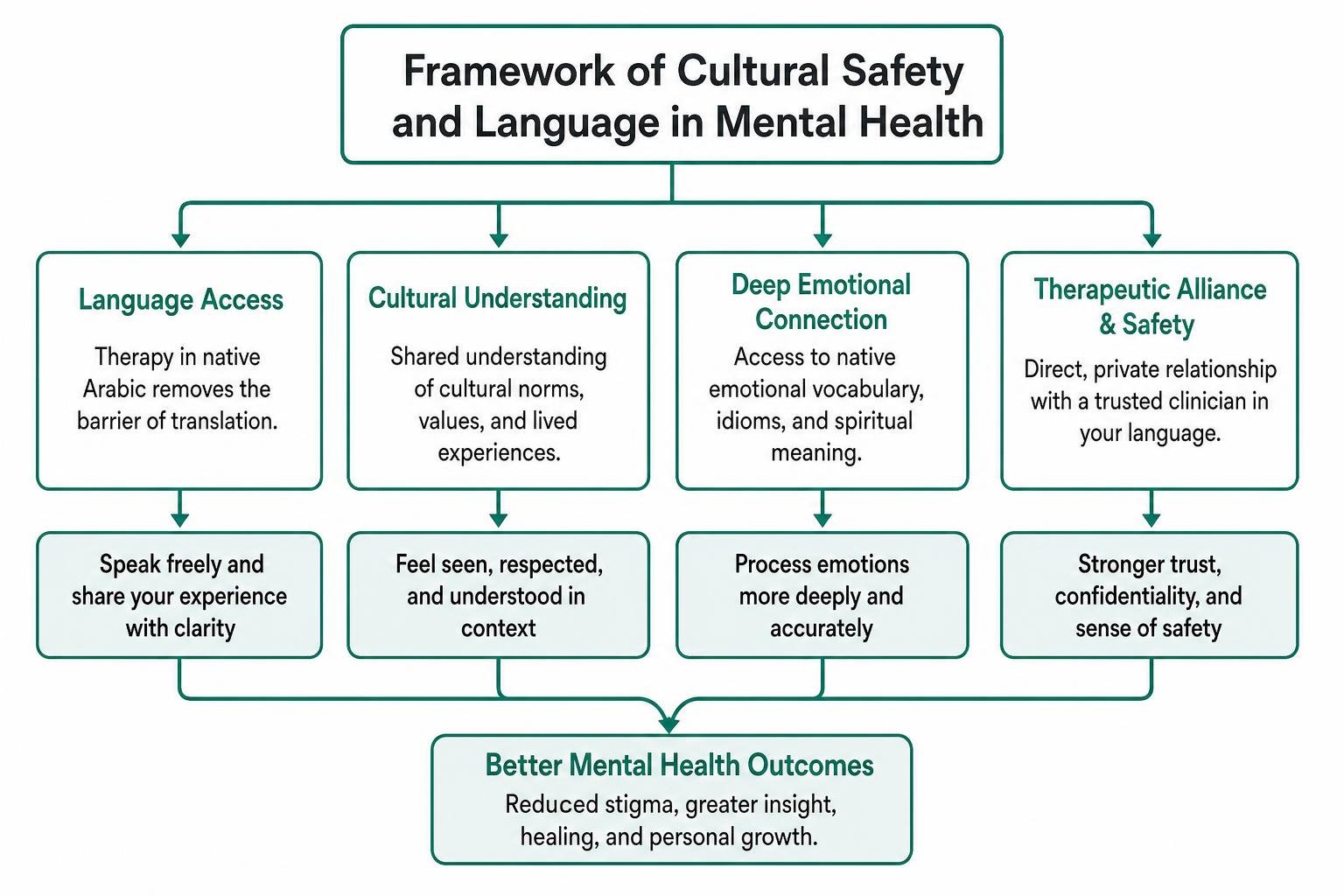
Cultural Nuances and Emotional Expression in Native Language
Language carries cultural history and unspoken social expectations. If particular Arabic words carry personal meaning related to family, spirituality, or community, you can explain that meaning to your therapist rather than relying on an English equivalent.
AMBH offers trauma therapy, including somatic approaches that consider the connection between mind and body. EMDR and Brainspotting are offered by other AMBH clinicians and are not available in Arabic. Ask your clinician how your language preferences can be incorporated into an individualized treatment plan.
Arabic Dialects and Therapeutic Rapport
Arabic is a rich language with many distinct regional dialects (ammiyya), from Levantine and Egyptian to Gulf and Maghrebi, alongside Modern Standard Arabic (fusha). A common question is whether you and your counselor must speak the exact same regional dialect.
If you and your clinician speak different dialects, ask how you will clarify unfamiliar words and check understanding. Mutual respect, empathy, and active listening are important parts of the therapeutic relationship.
Therapy Approaches at AMBH
Outpatient behavioral health covers a wide range of evidence-based methods tailored to your personal goals, life challenges, and cultural values.

Mental Health and Psychotherapy Modalities
Depending on your needs and your clinician, therapy at AMBH may draw on approaches such as:
- Cognitive Behavioral Therapy (CBT): Helps identify and reframe unhelpful thought patterns while respecting your cultural worldview.
- Psychodynamic Therapy: Explores how past family dynamics, cultural upbringing, and early life experiences shape current behaviors and relationships.
- Somatic and Body-Oriented Approaches: These approaches focus on the connection between mind and body.
- Trauma-Informed Care: Helps you process distressing life events in a paced, supportive setting.
Through comprehensive psychotherapy for individuals and families, outpatient counseling helps individuals work through depression, manage daily anxiety, build healthy boundaries, and process life adjustments.
Child, Adolescent, and Family Therapy
Children of immigrant parents often navigate two different cultures at once—balancing life at home with the social environment at school. This cultural gap can sometimes cause communication struggles within the household.
Family and youth counseling provides a structured environment where parents and children can bridge language gaps, navigate dual-identity dynamics, and build healthier communication. Outside our Arabic services, we also provide child and adolescent therapy with bilingual Polish-English therapists for children of Polish parents, supporting Chicago’s multicultural families with personalized outpatient care.
Practical Steps in Arabic Speaking Therapy
Taking the first step into counseling is a courageous choice. Knowing what to expect during your early sessions can help you feel grounded and prepared.
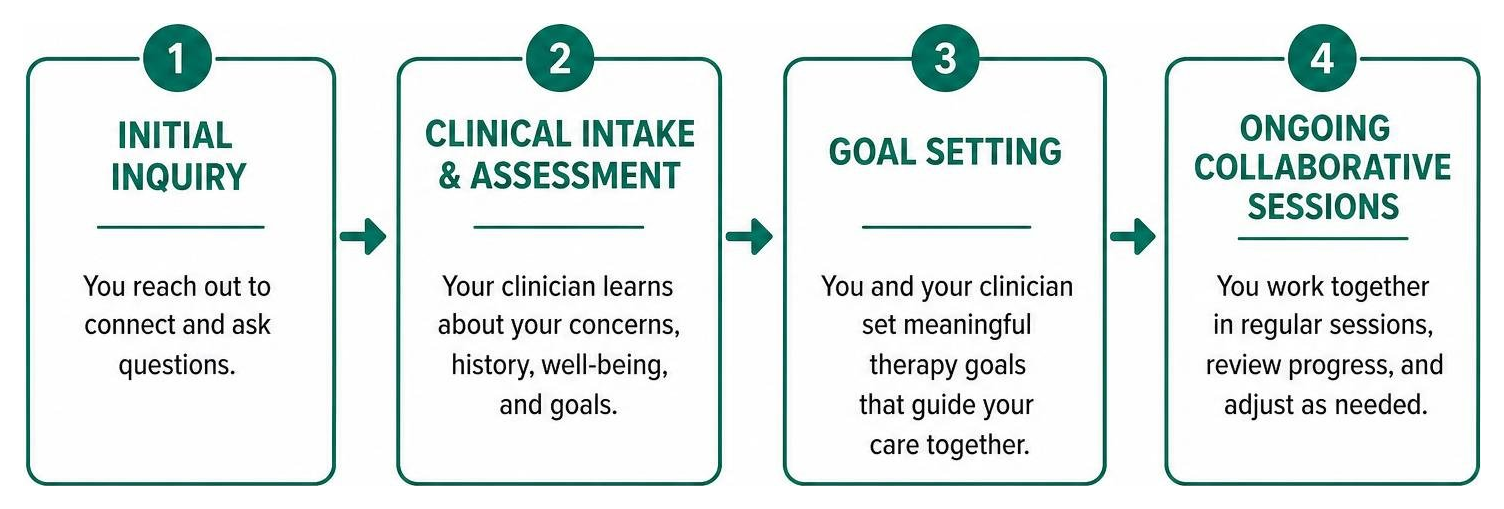
Preparing for Your First Arabic Speaking Therapy Consultation
Your first session is primarily an informational intake and clinical assessment. Your counselor will ask about your current concerns, personal history, physical well-being, and what you hope to achieve in therapy. You do not have to share every difficult detail right away; you set the pace for your own healing.
In addition to individual counseling, our clinicians conduct structured immigration psychological evaluations for asylum, extreme hardship waivers, VAWA, and U-visas, offered in English, Polish, Russian, and Spanish. These are strictly clinical evaluations, not legal services. We are not a law firm and do not provide legal or immigration advice; we always recommend consulting a qualified immigration attorney regarding your legal case.
Navigating Bilingualism with an Arabic Speaking Therapy Approach
Many second-generation adults and long-time immigrants are fully bilingual. You might naturally switch between Arabic and English during a session—a process known as code-switching.
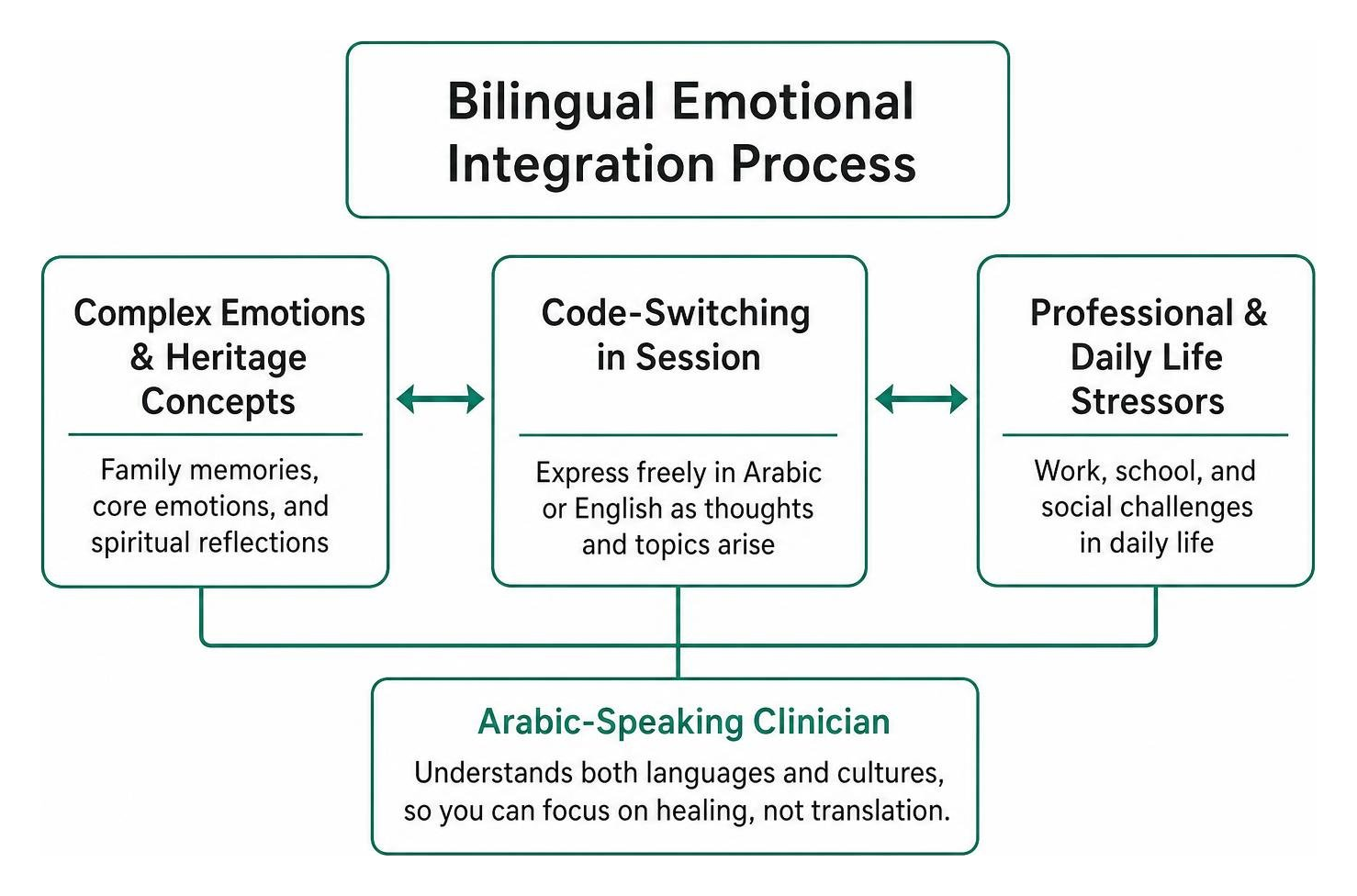
Code-switching in therapy allows you to express work or social stressors in English while shifting to Arabic for family memories, core emotions, or spiritual reflections. Ask whether your clinician offers sessions in both Arabic and English and how you can clarify meanings when switching languages.
Navigating Logistics: Costs, Insurance, Telehealth, and Credentials
Finding the right care involves practical steps like verifying clinician licenses, understanding privacy protections, and confirming insurance coverage.

In-Person Care vs. Telehealth Accessibility
Depending on your schedule and location, you can choose between face-to-face appointments and online sessions:
- In-Person Care: Our clinic is located in Edison Park, Chicago (6650 N. Northwest Highway, Suite 215).
- Telehealth Services: We provide virtual outpatient counseling by video for clients located anywhere within the state of Illinois.
Insurance Verification, Outpatient Coverage, and Provider Accreditations
Understanding therapy costs upfront may help reduce unexpected financial stress. Outpatient psychotherapy is covered by many commercial and public health plans.
- Insurance Plans: At AMBH, we accept Blue Cross Blue Shield (BCBS), Aetna, Cigna, Humana, UnitedHealthcare/Optum, Medicare (including Advantage PPO), and TRICARE. We do not accept Medicaid.
- Out-of-Pocket Rates: For self-pay clients, individual therapy sessions start at $150, couples therapy sessions start at $180, and group therapy is $45 per hour. A reduced fee may be available case by case. For specialized evaluations, please contact us for pricing.
- Licensing and Standards: Always verify that your psychotherapist holds a valid state clinical license (such as LCSW, LCPC, LMFT, or clinical psychologist). AMBH provides outpatient psychotherapy and does not prescribe or manage medications.
Frequently Asked Questions About Arabic Speaking Therapy
How do I know if a therapist is truly fluent in Arabic?
You can get a clear sense of a clinician’s language fluency during your initial phone consultation. A brief conversation allows you to hear their comfort with conversational and clinical terms, helping you decide whether the clinician feels like a good fit.
What should I do if my therapist speaks a different Arabic dialect?
Ask your clinician how they handle dialect differences and clarify unfamiliar terms. If dialect differences ever make it difficult to communicate comfortably, bring it up with your counselor so you can adjust your approach together.
What should I do in a mental health crisis?
We provide outpatient psychotherapy.
If you are in crisis, call or text 988 (Suicide & Crisis Lifeline) or call 911 in an emergency.
Conclusion: Connecting with Culturally Responsive Outpatient Care
Finding a clinician who understands both your language and your cultural background may make a meaningful difference in your mental health journey. At the Association for Multicultural Behavioral Health (AMBH), we provide compassionate, culturally informed outpatient counseling designed to support you and your family.
To learn more about our clinicians, explore our multicultural clinical team. If you are ready to begin therapy in Chicago or via telehealth anywhere in Illinois, please contact our office to schedule a consultation or call us at (773) 313-3757.