



How Accident Trauma Therapy Can Help After a Crash
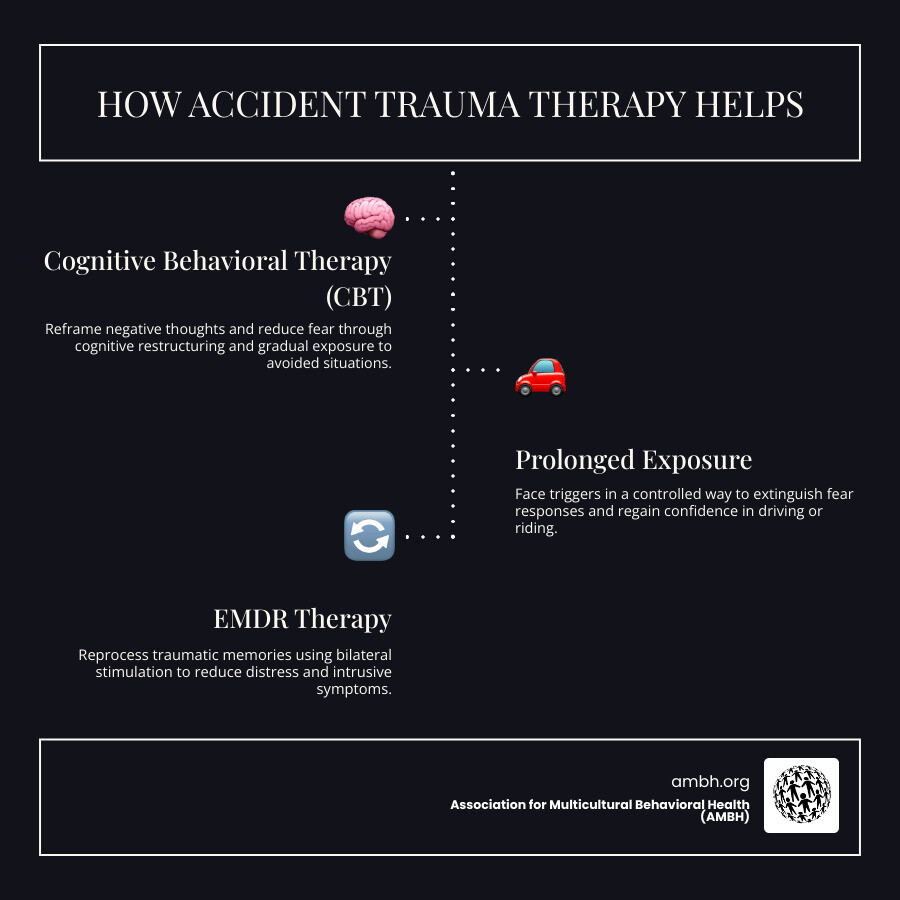
Accident trauma therapy helps you address fear, upsetting memories, and changes to daily life after a crash. Depending on your needs, a therapist may use cognitive behavioral therapy (CBT), gradual exposure to situations you avoid, or EMDR. You do not need a PTSD diagnosis to ask for support.
Feeling shaken at first is common. If nightmares, driving anxiety, or other symptoms persist, worsen, or disrupt your routine, consider speaking with a mental health professional.
At the Association for Multicultural Behavioral Health (AMBH), founded by Angelika Danek, LCSW, CRADC (Founder and Clinical Director), our multilingual outpatient team helps people explore their therapy needs. Here, we explain what to consider when seeking accident trauma therapy.
Understanding the Psychological Impact of Motor Vehicle Collisions
Motor vehicle collisions can cause physical injury and emotional distress.
After an accident, emotional symptoms may include feeling disconnected, constantly on guard, or anxious. Recognizing these invisible wounds is the first step toward genuine recovery.
Common Psychological Conditions Following an Accident
A severe crash can trigger several interconnected mental health challenges:
- Post-Traumatic Stress Disorder (PTSD): Symptoms include recurring flashbacks, distressing nightmares, emotional numbness, and intrusive imagery of the impact.
- Travel Phobia and Driver Anxiety: Driving or travel fears are concerns to discuss with a therapist.
- Depression: Depression can occur after trauma.
Warning Signs Indicating a Need for Professional Mental Health Support
Consider speaking with a licensed mental health professional if emotional symptoms persist, worsen, or disrupt daily life. Key indicators that professional outpatient care may be beneficial include:
- Sudden panic attacks, racing heart, or sweating when approaching a vehicle
- Chronic sleep disturbances, insomnia, or intense nightmares about collisions
- Constant hypervigilance and scanning traffic patterns obsessively as a passenger
- Complete avoidance of highways, intersections, or driving altogether
- Emotional detachment, irritability, or unexplained angry outbursts toward family members
- Inability to return to work or fulfill family obligations due to fear
If you are in crisis, call or text 988 (Suicide & Crisis Lifeline) or call 911 in an emergency.
Core Evidence-Based Approaches in Accident Trauma Therapy
Navigating emotional recovery after a collision does not mean reliving the crash indefinitely. Modern clinical approaches in outpatient trauma therapy are designed to calm the nervous system, reprocess distressing memories, and restore confidence behind the wheel.
Cognitive Behavioral Therapy and Prolonged Exposure
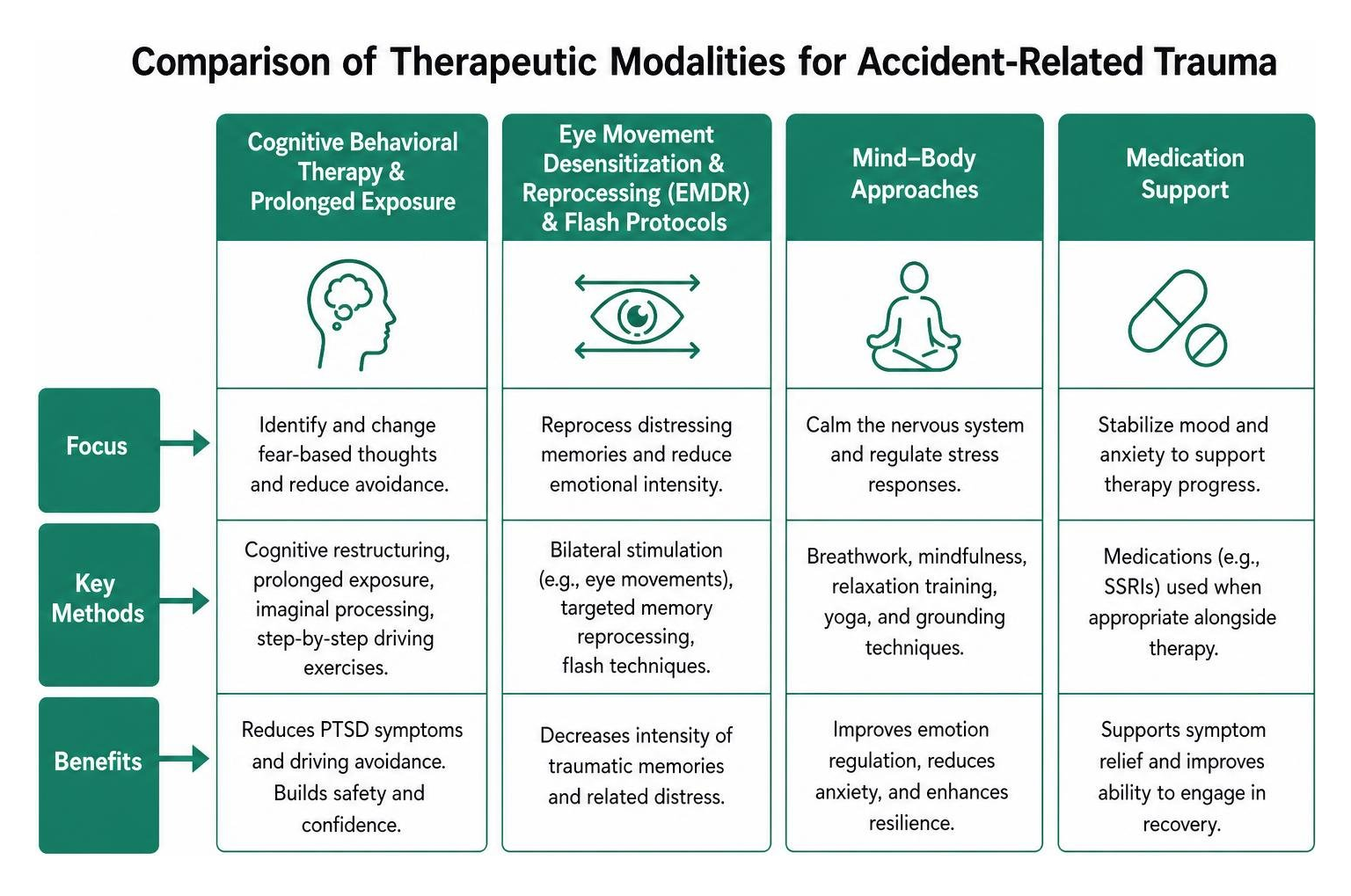
Cognitive behavioral therapy (CBT) can help people examine trauma-related thoughts and responses. Prolonged exposure (PE) involves working with trauma memories and gradually approaching safe situations that have been avoided. A licensed professional can assess whether an exposure-based approach is appropriate and help plan manageable steps.
Eye Movement Desensitization and Reprocessing (EMDR)
EMDR uses bilateral stimulation—such as guided eye movements, gentle alternating tones, or tactile taps—while the client focuses on selected memories, emotions, or body sensations, with the aim of making distressing memories less overwhelming.
Somatic and Body-Centered Interventions
Trauma can be accompanied by muscle tension, changes in breathing, or difficulty relaxing. Somatic therapy may involve noticing bodily sensations, grounding, and breathwork to support emotional and physical regulation.
| Therapy Modality | Primary Focus | Concerns to Discuss With a Therapist | Typical Session Structure |
|---|---|---|---|
| Cognitive Behavioral Therapy (CBT) | Reframing irrational threat thoughts and gradual behavioral exposure | Driving phobias, general anxiety, depressive mood shifts | Identifying cognitive distortions, tracking triggers, structured driving homework |
| Prolonged Exposure (PE) | Extinguishing conditioned fear through detailed imaginal and real-world exposure | Trauma memories and avoidance to assess with a clinician | Revisiting the memory safely in session, graded real-world driving steps |
| EMDR | An approach intended to reduce distress associated with traumatic memories | Intrusive flashbacks, sudden startle responses, distressing imagery | May use guided eye movements, tapping, or sounds while attending to selected memories |
| Somatic Interventions | Re-regulating the autonomic nervous system and releasing physical bracing | Muscle tension, somatic panic, physical hyperarousal | Body scans, grounding exercises, tracking physical sensation cues |
The Intersection of Physical Healing and Emotional Rehabilitation

Physical recovery and emotional recovery after a car crash are deeply intertwined. Trauma can involve physical sensations such as pain or muscle tension.
How Accident Trauma Therapy Addresses Physical Recovery and Chronic Pain
Trauma may involve muscle tension, changes in breathing, and difficulty relaxing. A licensed medical provider can assess persistent pain or injury symptoms, while psychotherapy can support emotional coping alongside medical care.
Outpatient counseling can support emotional coping during recovery.
When to Seek Support
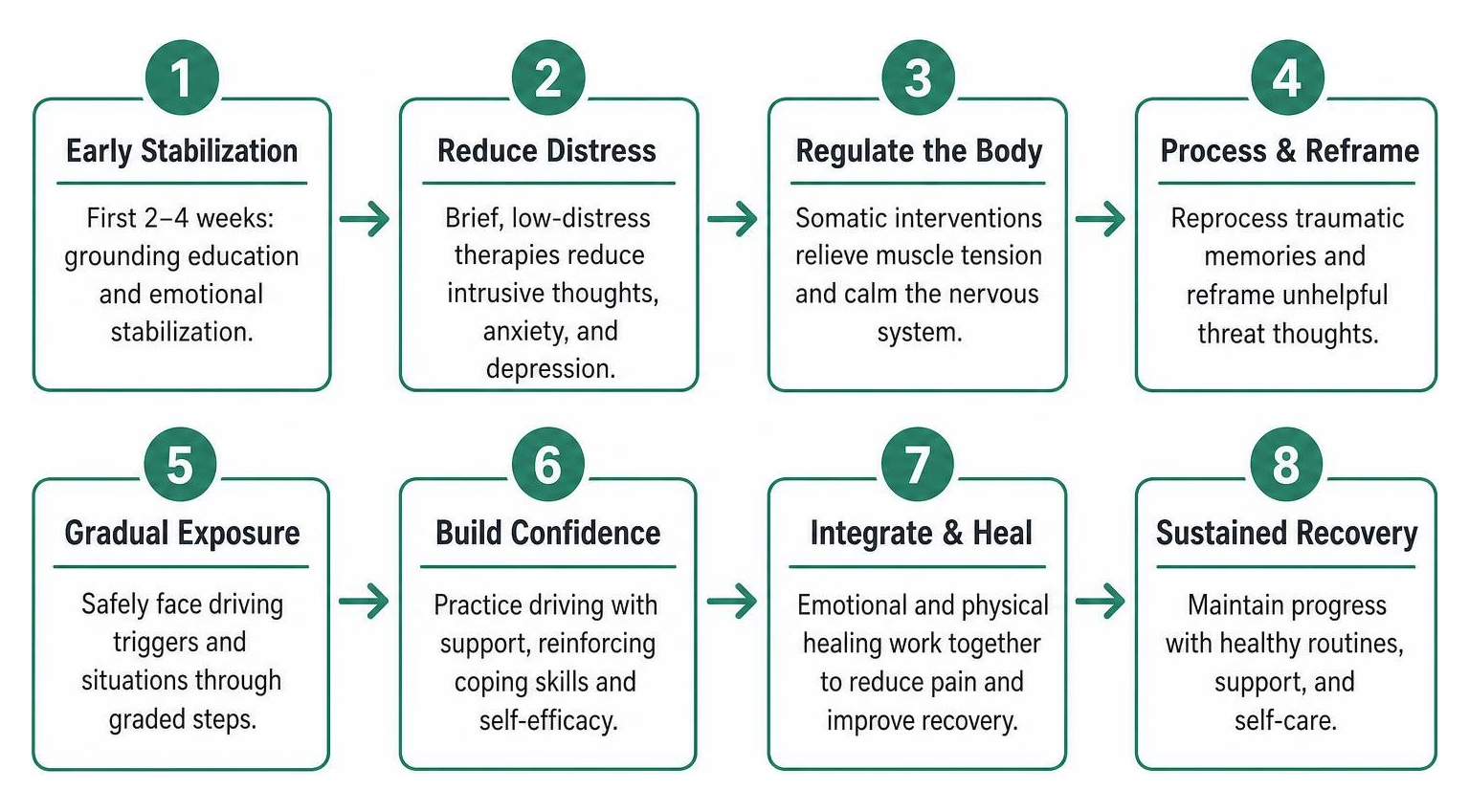
If emotional symptoms persist, worsen, or interfere with daily life, consider speaking with a licensed mental health professional. Our therapists work at each client’s pace and may use grounding skills, cognitive-behavioral strategies, and other approaches based on individual needs.
Practical Steps for Recovery and Support Systems

Recovery thrives within a compassionate, understanding environment. Family members and friends can provide meaningful support by listening without judgment, avoiding dismissive comments like “At least the car was insured,” and offering to ride along as calm companions when the survivor feels ready to practice driving.
What to Expect During Accident Trauma Therapy Sessions
Starting counseling after a crash is a collaborative, paced process. In our outpatient individual therapy programs, you can discuss your needs and possible approaches with a therapist:
- Discussing your history and current concerns.
- Exploring grounding and body-awareness practices.
- Considering EMDR, Brainspotting, or cognitive-behavioral approaches according to your individual needs.
Please note: AMBH provides outpatient psychotherapy and does not prescribe medication. Always consult with a licensed medical provider regarding prescriptions or medical advice.
Special Considerations for Children, First Responders, and Fatal Collisions
- Children and Adolescents: AMBH offers child and adolescent therapy; a therapist can discuss a younger survivor’s needs with the family.
- First Responders: Emergency personnel frequently encounter multi-vehicle collisions and severe scenes. Tailored trauma support respects their occupational realities without pathologizing their responses.
- Loss and Grief: If a crash involved a death, discuss grief and trauma-related concerns with a therapist.
Frequently Asked Questions About Post-Collision Mental Health
How soon after an accident should someone start therapy?
It is wise to seek an initial assessment if emotional distress, sleep disruption, or driving fear persists, worsens, or significantly interferes with your ability to commute, work, or care for family.
Can accident trauma therapy help if the crash happened years ago?
Therapy may help even when the crash happened years ago. Trauma-related symptoms may surface years after an event. A therapist can assess your current needs and discuss whether approaches such as EMDR or CBT may help.
Does therapy help reduce driving anxiety and travel phobias?
Therapy may help with trauma-related anxiety. A licensed professional can assess driving or travel fears and discuss an individualized approach.
Rebuilding Confidence and Well-Being After a Collision
Healing after a motor vehicle accident involves more than repairing your vehicle or completing physical rehabilitation—it means restoring your sense of safety, emotional stability, and independence.
At the Association for Multicultural Behavioral Health (AMBH), our outpatient practice in Edison Park, Chicago, provides compassionate, culturally responsive care tailored to your needs. Our multilingual team of licensed clinicians provides therapy in English, Polish, Spanish, Russian, and Arabic, serving clients in Chicago and clients located throughout Illinois via telehealth. Service availability varies by language.
Individual therapy sessions start at $150, couples sessions start at $180, and group therapy is $45 per hour (reduced fee may be available case by case). We accept most major insurance plans, including Blue Cross Blue Shield, Aetna, Cigna, Humana, UnitedHealthcare/Optum, Medicare (including Advantage PPO), and TRICARE (please note that we do not accept Medicaid).
To schedule an initial outpatient consultation for specialized trauma therapy, contact our team today via our contact page.